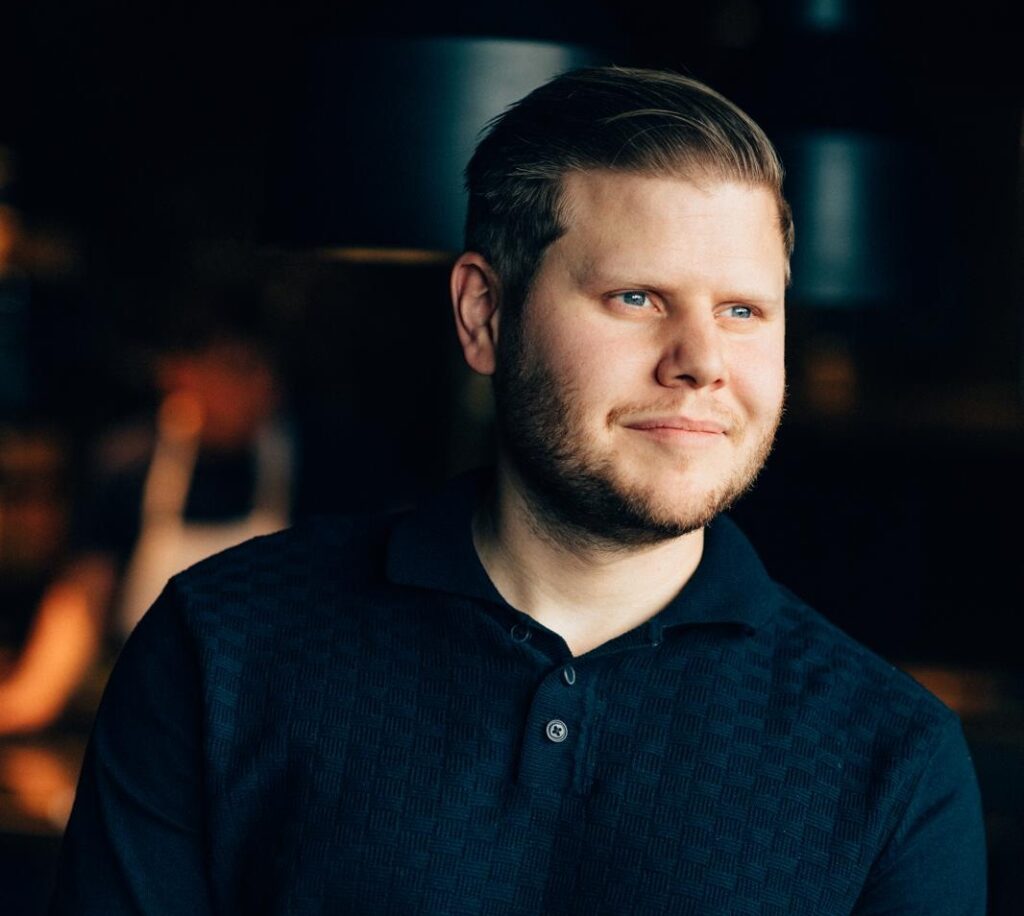
Between busy services, clattering pots and pans, and new culinary ideas constantly bubbling away, Chef Emanuel Tärnqvist has plenty on his plate. As Executive Chef of Stockholm institution Operakällaren and culinary leader of Operahuset, he has one foot in a house steeped in Swedish dining history while continuing to push forward with projects of his own.
Then there are Black Milk Gastro Bar and its new sister restaurant, Leche Negra, two restaurants under the same roof yet deliberately worlds apart. At Black Milk, the team plays with an omakase-style tasting experience driven by creativity and seasonal produce, while Leche Negra takes a more relaxed route, bringing classic cooking together with bold flavours and a New York-Parisian flair. And the latter is only getting started, with breakfast and brunch next on Tärnqvist’s agenda.
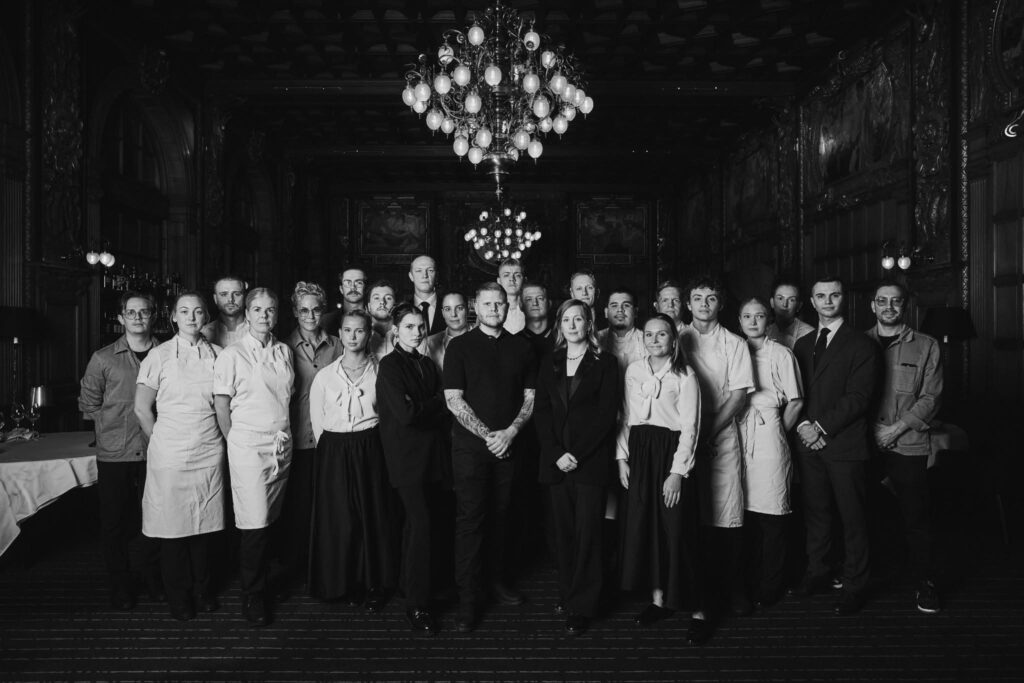
Between all of that, Tärnqvist made time for RADARLIST, and what followed was a conversation filled with plenty of laughs and refreshingly candid answers. We chatted about his new and ongoing projects, what comes next, and the current state of Swedish cuisine and cooking culture, from the return of proper sauces and Swedish staples to why not every plate needs to be made for Instagram.
Read on to get to know Chef Emanuel Tärnqvist and the many things currently cooking in his world.
– Images courtesy of Chef Emanuel Tärnqvist ( including featured image) –
1. You’re wearing many different hats today. If Operakällaren, Aloë, Black Milk Gastro Bar, and Leche Negra were four people sitting around the same dinner table, how would you introduce each of them?
Aloë is a restaurant we opened 11 years ago, and it has served as our “gastronomic child.” It achieved two Michelin stars, though it is currently closed following the passing of my business partner, Daniel Höglander. I hope it will return one day when we are ready and everything is aligned.
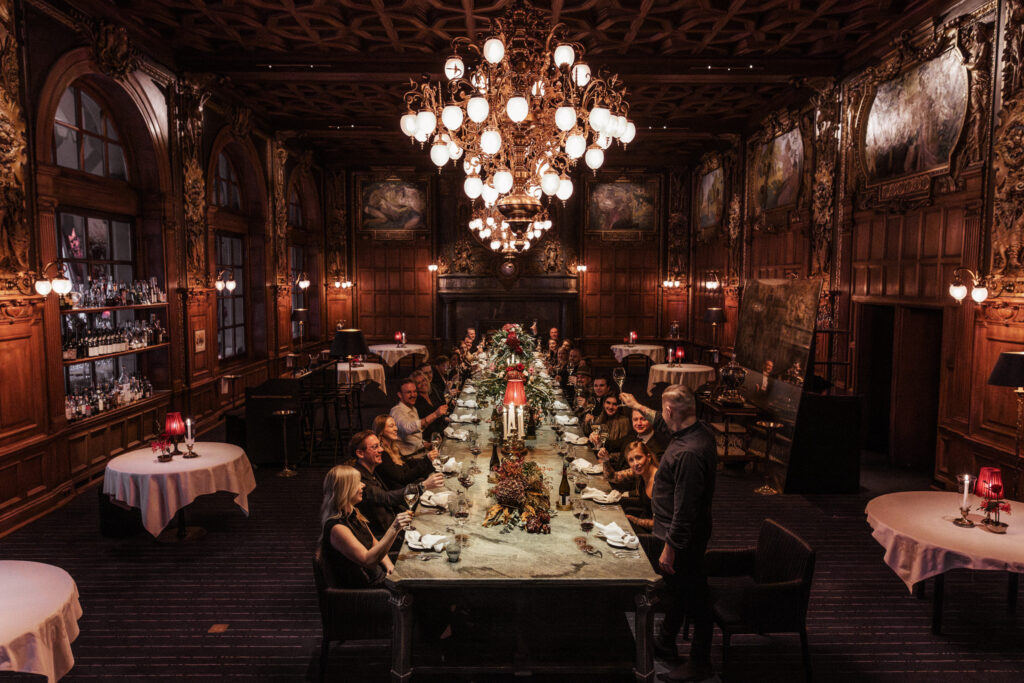
Operakällaren is an iconic Swedish institution and culinary destination that has been around since 1787. It is known for having Sweden’s largest wine cellar with over 35,000 bottles. It has been a privilege to manage the kitchen since 2024 to continue what has already been done and to understand its history, while taking pride and comfort in trying something new and pushing Operakällaren forward. It is an amazing venue to be in. It is like a museum, you could say.
For me, Black Milk Gastro Bar is more like a “rebellious little sister” with loud music, a cosy and compact lounge atmosphere and cocktail pairings, but with the same high-level gastronomy we usually offer.
As for Leche Negra, this is our newest opening. We wanted to create our take on a French bistro with a bit of New York dining inspiration, just like how restaurants were supposed to be 30 or 40 years ago with properly dressed staff, bartenders and a menu you can understand. It is an à la carte menu with starters, main courses and desserts where the server does not have to stand there for 15 minutes explaining how to eat. It is comforting, but you can still see our DNA in the menu, with twists that make each dish interesting.
2. How do you stop all of your restaurants from sounding like the same voice?
That’s a very good question. If you look at Operakällaren, there is so much in how the waiters act, how we serve the food, how we cook it, and how we present it. When you walk into that dining room, you feel royal for an evening. It’s something completely different from anything else you have in Sweden. I think that’s the most important thing. It’s maybe not what’s on the plate. It can be almost the same, but it’s how you do the lighting in the restaurant, the music, how the waiters look, and how they act.
It’s about how you want people to feel. What world do you want to move people into when they walk in? When you walk into Leche Negra, all of a sudden, it doesn’t feel like you’re in Stockholm anymore. It feels like you’re in Paris or New York or somewhere else. As a chef, I think when you operate a lot of places, each one needs to feel like its own destination. Of course, you do that with the food, but also with the waiters and the whole concept of the place.
Black Milk Gastro Bar and Leche Negra are in the same location with the same kitchen. They’re just on opposite sides of the building, but they couldn’t be further apart. It’s completely different when you walk through one door or the other because of the concepts and what you feel when you walk in. But even though each venue has a different feel, I still want the guests to feel our DNA. Our touch should really be there, whatever the concept is, so we don’t stray too far away from ourselves. That’s very important.
In terms of guests, at Operakällaren we have regulars who have been coming for 50 years. They grew up eating there, and they are still regulars. Of course, we also have a lot of international guests because it’s right in the city, close to the Grand Hôtel. Then, if you take Leche Negra, there are, of course, a lot of locals because it’s in the middle of the city. For Black Milk Gastro Bar, it’s a bit more for adventurers, you could say.
3. If someone hasn’t visited Sweden in ten years, what would surprise them most about the country’s restaurants today?
I think what would surprise them most is that New Nordic cuisine isn’t as dominant as it was 10 years ago when it had such a strong influence.
I think the restaurant scene here is getting more and more back to, not bistro, but proper Swedish cooking. You get a whole piece of grilled turbot. I don’t know how many restaurants in Stockholm now have a steak with peppercorn sauce. These old classics are coming back, and I think that would surprise a lot of people. It’s almost like a homecoming, in a way. We tried this New Nordic stuff for a few years, but no one wanted to eat bark, birch, pine cones, and stuff. [Laughs] So we started eating good stuff again.
There are also a lot of new restaurants compared to 10 years ago. If you look at Michelin-starred restaurants, it’s a completely new scene. So many have closed, and so many new Michelin-starred restaurants have opened. It’s something completely new.
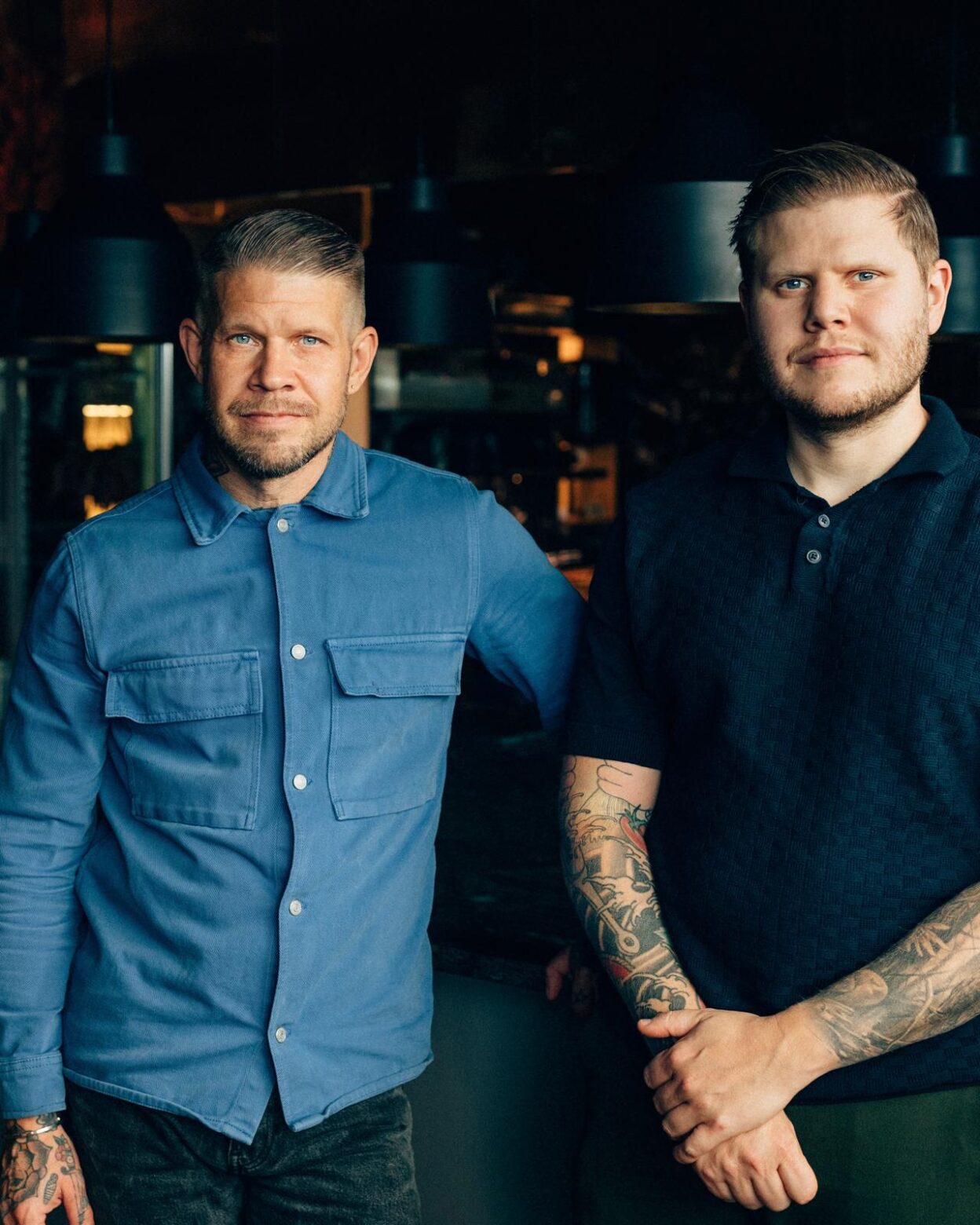
4. What excites you most about the next generation of Swedish chefs?
I think that’s part of this homecoming for Swedish cuisine we talked about. One of the greatest things I feel right now is that a lot of chefs are starting to really cook again. They take pride in making a good sauce or grilling a piece of fish.
The new generation of cooking, though, I think is split in two right now. You have this generation that cooks for Instagram pictures. It’s quite big, and sometimes they forget about the flavours. Then you have another generation that really cares about flavour and taste, which I hope to see grow bigger and actually start cooking food that they really want to eat.
There’s a beautiful dish that’s pretty to look at but doesn’t taste good because there’s too much fuss around it, and then there’s an ordinary-looking dish that you see and know is going to taste great. Those are two completely different things. There’s a dish I make for Leche Negra that is just rice with lobster on top. That’s the dish. It’s only two main things: rice in the sauce and lobster on top. I have nothing more on it. It’s our bestseller. It’s so simple, but I think it’s the tastiest because we take all the other fuss away. So, yeah, I’m looking forward to seeing the younger generation cook more and serve up warm, cosy dishes.
5. Is there a Swedish ingredient you think deserves far more attention internationally?
No. [Laughs] I think the Swedish products that are really good already get the attention they deserve. That’s what I mean. We’re in the Nordics. We’ve salted and cured things for 500 years to preserve them because that’s what we had and what we could do.
We have amazing strawberries for two weeks in the summer. We have chanterelles, and of course, we have some good game.
6. If someone only had 48 hours in Stockholm, where should their appetite lead them?
I think they should go to Leche Negra, of course. [Laughs] There’s also a good place called Bord, which means “table” in English. They cook simple dishes, you could say, just the good stuff. Then you have Miyakodori. They only make skewers, and they are amazing.
There’s also a place called Sturehof, where they serve Swedish classics like meatballs and gravlax. Everyone should eat there once to get to know Swedish cuisine. Go there late, like one o’clock in the morning.
7. Beyond Stockholm, which town should food lovers put on their radar?
I think Stockholm is the most food-centred because Sweden is pretty small. For most chefs, if you want to succeed and find your audience, you move to Stockholm. Of course, there are a lot of good places outside Stockholm, but they’re very spread out across Sweden. If you want to find the most in one place, it’s Stockholm.
And like I mentioned before, I used to work in Sydney. It’s very far away for most people, but both Sydney and Melbourne are amazing. I would suggest visiting these two cities if you’re a food lover. Last summer, I also went to Istanbul, which is amazing for food as well.
8. If you wanted someone to understand Sweden through five bites, where would you send them?
I’d still say Sturehof. That would be the perfect place. You get everything there. I think they even serve surströmming, the fermented herring, when it’s in season. You can get the meatballs, gravlax, and herring. It’s the place to experience what true Swedish cuisine is about because they cook everything properly, just how it’s supposed to be. You’ll get all the classic dishes there. And you need to drink snaps (or schnapps) as well. Very important. [Laughs]
9. Where do you escape when you want inspiration away from the kitchen?
I have two small kids, so I don’t have much time for travelling. [Laughs] When it comes to inspiration, I just try to keep my mind open all the time.
If I’m in the car, sitting on the bus, or having an interview with you now, and I get a glimpse of an idea, I’ll build something from that. I never really go on culinary trips to find inspiration. The trick is to always keep an open mind, try anything, and not limit myself. Stay curious.
10. Before we let you get back to the kitchen, what’s next for you? Is there anything on the horizon that you’d like to share first with RADARLIST?
For me, the next four or five months will be quite special. It’s the last few months at Operakällaren before it closes for a major renovation. It’s going to be closed for five, six, or seven years. For me, it’s about finishing on a high at Operakällaren, cooking the best food, having the most fun, and making people as happy as we can. It’s been around for such a long time, and now it’s closing for so many years. I feel honoured to be there to close this chapter.
Of course, it’s going to be sad for the regulars, especially during the Christmas table. Some people have been coming for Christmas food at the same table, on the same date and at the same time, for the last 45 years. Next year, they’ll need to find something else, which I think will make a lot of people sad. However, we’ll be open until December, and we’ll still have the Christmas table. Christmas Eve will be the last day before the big renovation.
As for Leche Negra, we’ve started the dinner and lunch concepts, but now we also want to introduce breakfast and brunch. We really want it to feel like a restaurant where you can go at any time of the day, seven days a week. I’ve never done breakfast before, so I think that will be the biggest challenge. I’ve never eaten breakfast in my life either. [Laughs]But it will be great.